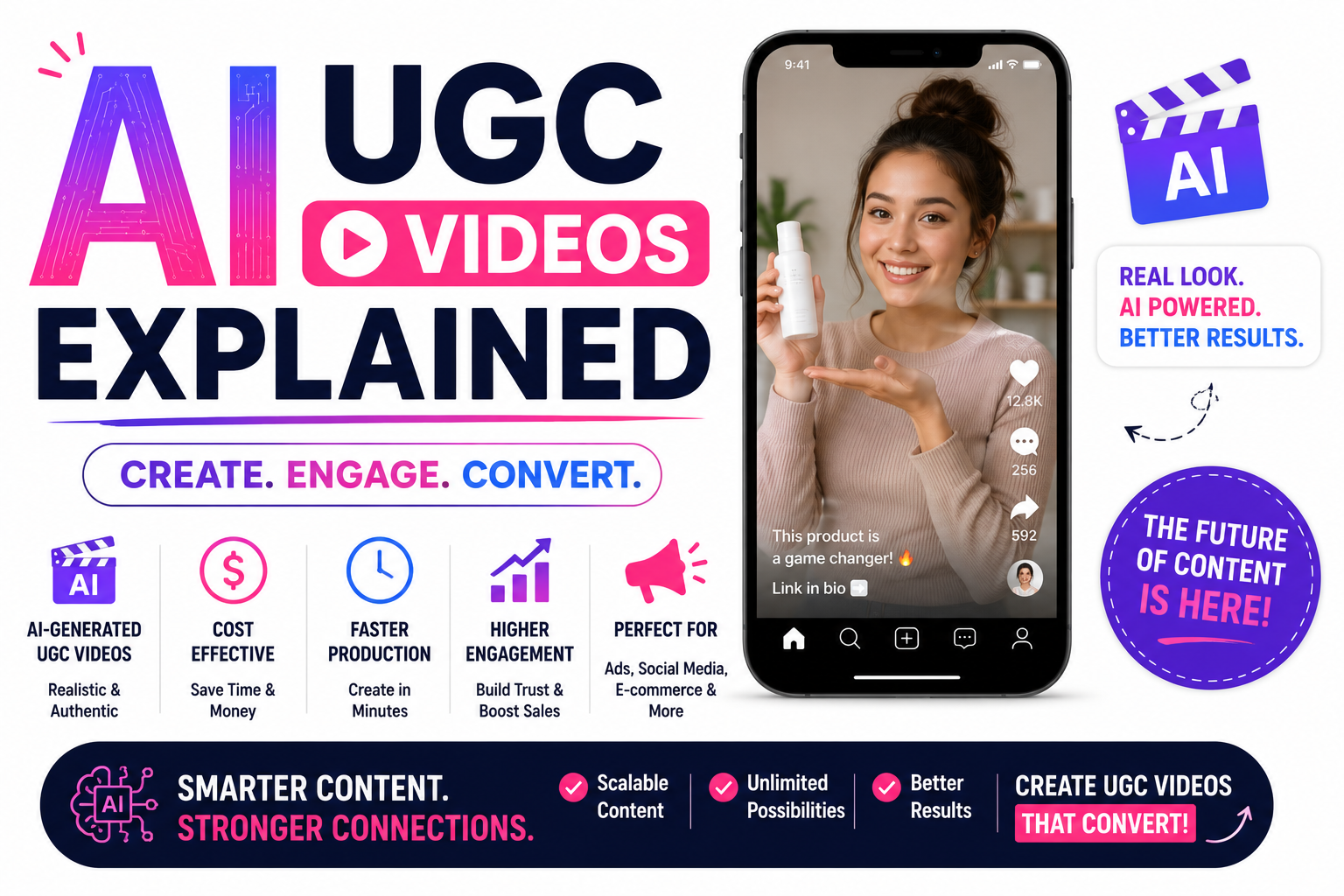
Learn what AI UGC videos are, how they work, and how creators and businesses use them to boost engagement and sales. Explore the best AI UGC tools, strategies, and monetization tips for 2026.
AI UGC Videos Explained: How to Create High-Converting Content in 2026
AI UGC videos are everywhere in 2026 — those casual, creator-style clips of “a real person” talking about a product, except no real person was ever filmed. They’ve become one of the hottest formats in performance marketing. But here’s the honest truth up front: most of them flop. The winners aren’t made by better tools — they’re made with better strategy. Let’s break down what AI UGC is, why it works, and how to actually make content that converts.
What is AI UGC, exactly?
First, UGC. User-generated content is that authentic, casual style where a real person shares their honest take on a product — a review, a demo, a reaction. Brands love it because it feels native, not like an ad. Ads that feel like ads get skipped; content that feels like a recommendation gets watched.
AI UGC creates that same creator-style content using AI avatars and AI video tools — without sourcing creators, shipping products, or filming anything. The workflow is almost absurdly simple: upload a product image, pick an AI avatar that matches your audience, drop in a script, and export. What used to take weeks now takes minutes.
The core truth: AI replaces the execution, not the thinking. Feed it a shallow brief and you get one more forgettable ad in the feed.
Why it exploded
The appeal is real. Traditional UGC meant finding creators, negotiating rates, shipping products, waiting for filming, and sorting usage rights — a process that stretched into weeks while ad performance moves in days. AI UGC compresses all of that into minutes. That solves the number-one killer of ad campaigns: creative fatigue. When you can generate dozens of fresh variations without a single shoot, testing and scaling becomes a structural advantage — cheaper, faster, and endlessly repeatable.
How to create high-converting AI UGC
Before generating anything, define your product, your exact audience, and your angle — the same brief you’d hand a human creator. Shallow input produces generic output. This thinking step is where good ads are won or lost.
If the hook fails, the ad fails. Use AI to generate 5–10 hooks built on proven frameworks like Pain-Agitation-Solution or Hook-Story-Offer, then pick the strongest. A scroll-stopping opener matters more than anything else in the clip.
This isn’t about picking a random face — it’s about alignment. Selling fitness supplements to men 25–35? The avatar should reflect them. Skincare for women over 40? The avatar should mirror their life. Relevance builds trust instantly.
Don’t write a TV commercial. Write how a real person talks — casual, specific, one clear point. The script should sound like a friend’s recommendation, not a brand announcement.
Media-literate audiences spot polished ads instantly. The best AI UGC leans into realism — natural pauses, simple backgrounds, the product held in hand. Ironically, looking effortless takes precision. Perfect is the tell; real converts.
View the final clip on an actual phone — uncanny motion, stiff faces, and product distortion show up where UGC is really watched. Then add a visible AI disclosure (like “#MadeWithAI”); platforms increasingly expect it, and it keeps you compliant and honest.
The real power is volume. Generate several variations, launch them, kill the losers, and pour budget into the winners. Treat creative as a data-driven system, not a one-off — that’s how the pros win with AI UGC.
The tools (a quick note)
Plenty of tools are purpose-built for this — popular 2026 names include Arcads, Creatify, and HeyGen for avatar-led ads, plus general AI video generators for realistic scenes and b-roll. They change fast, so compare current options for your use case and test before you commit. Remember: the tool executes; your strategy decides whether it converts.
An honest reality check
AI UGC is a genuine, matured strategy in 2026 — not a magic money button. Results vary widely, the average clip underperforms, and the low barrier means the feed is flooded with lazy ones. What separates winners is strategy, authenticity, and honest disclosure. And in categories where trust matters most, real human creators can still outperform AI — so use AI UGC as a powerful tool in the mix, not a total replacement.
Frequently asked questions
The good ones can, but results vary a lot. Conversion comes from strategy — hook, audience match, and authenticity — far more than from the tool itself.
Yes — add a visible AI tag. Platforms increasingly expect it, and transparency protects your brand’s trust and keeps you compliant.
It’s faster and cheaper for testing at volume, but real creators still win where authenticity is everything. Many brands use both.
Weak strategy, not weak tools. A shallow brief, a boring hook, a mismatched avatar, or an over-polished feel — those are what sink most clips.
Send your ad traffic somewhere that converts
A high-converting video is only half the job — it needs a clean destination. Build one link page with your product, offer, and checkout in one place. Start free on Linqin.in.
