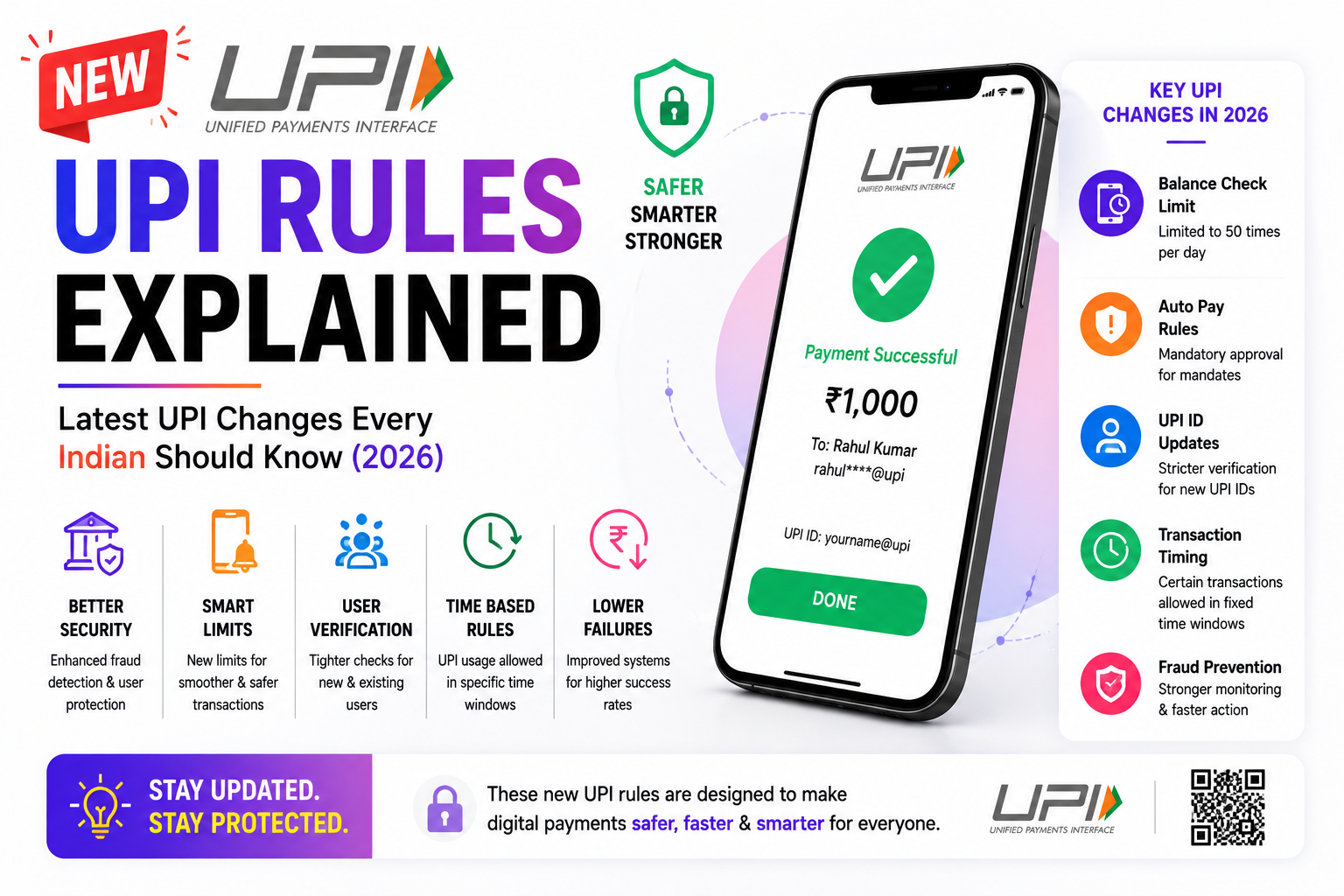
Understand the latest UPI rules and updates in 2026. Learn about new transaction limits, security improvements, technical changes, merchant payment proposals, and how these updates affect PhonePe, Google Pay, Paytm, and BHIM users
New UPI Rules Explained: The 2026 Changes
UPI runs our daily lives now — chai, rent, salaries, everything. So when NPCI quietly updates the rules, it’s worth understanding what actually changed. The good news: for splitting a bill or paying a shopkeeper, nothing gets harder. Behind the scenes, though, limits went up for big payments, security got tighter, and the whole system got more stable. Here’s the plain-language rundown of the 2026 UPI changes every Indian should know.
Your everyday P2P limit stays at ₹1 lakh per day. But for verified merchants in select categories — insurance, education, healthcare, capital markets, travel, and government payments — UPI now allows up to ₹5 lakh per transaction and around ₹10 lakh in 24 hours. Big-ticket payments no longer need a bank transfer.
If you’ve just created a UPI ID or linked a new bank account, you can transact only up to ₹5,000 in total for the first 24 hours. It’s a simple guardrail: if a fraudster hijacks a fresh setup, the damage in that first day is capped.
Before you pay, the confirmation screen must show the recipient’s verified banking name, pulled from a secure source — not a nickname they typed themselves. This kills a whole class of “fake name” scams and cuts down on money sent to the wrong person by mistake.
When a transaction is pending, you can now check its status only a few times — with a mandatory gap of about 90 seconds between attempts. It sounds annoying, but the frantic re-tapping people used to do was overloading servers and causing more failures for everyone.
Recurring payments — EMIs, SIPs, subscriptions — are now scheduled to process during non-peak hours rather than during busy periods. Your auto-pays still happen on time; they’re just moved out of rush hour so they don’t clog the network when everyone’s transacting.
NPCI capped how often apps can fire off high-frequency requests like balance and status checks, which used to overload the system at peak times. The payoff for you is quieter but real: fewer “transaction failed” messages and better uptime when everyone’s paying at once.
Tied to the RBI’s wider framework, UPI payments now require two-factor authentication with at least one dynamic factor unique to each transaction. In short: a PIN alone or an SMS OTP alone isn’t enough anymore for higher-risk payments — a big blow to OTP-phishing scams.
UPI paid straight from your bank account stays free for you — no fees, no charges. Two things to remember: your bank may set a lower limit than NPCI’s ceiling (often lower for new accounts), and UPI Lite exists for quick small payments without entering your PIN each time.
Collecting via UPI? To access the higher category limits you need to be a verified merchant, and if your QR-based goods sales cross ₹40 lakh in annual turnover, GST registration becomes mandatory. Also expected in 2026: EPF/PF withdrawals routed directly to a UPI-linked bank account.
Every one of these changes points the same way: UPI is getting more flexible for legitimate high-value payments, while security and stability quietly tighten underneath. For most people paying rent or splitting a bill, nothing changes. For anyone about to pay a large fee or premium — or running a business collecting online — it’s worth knowing which tier and limits apply before you plan the payment.
A few honest notes. This isn’t financial or legal advice — your actual limits depend on your bank and the merchant’s category, and some items above are still rolling out, so confirm the specifics before planning a big payment. And one safety reminder that never expires: you never need to enter your UPI PIN to receive money. If anyone asks you to “enter your PIN to get a refund or payment,” it’s a scam — the exact kind these tighter rules are built to stop.
Collect payments the easy way
If you’re a creator or small business collecting via UPI, keep your links, products, and payments on one page you own — with trusted, compliant checkout that handles the new rules for you. Get paid without the friction. Start free on Linqin.in.
